Dr. Riddhi D. Shah
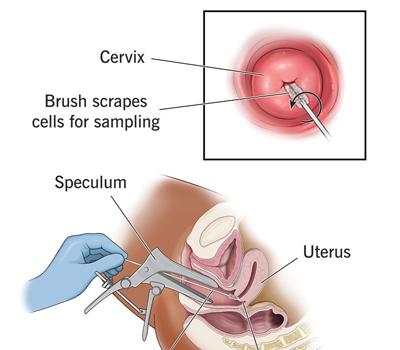
Pap smear testing and HPV vaccination play an important role in preventing cervical cancer and maintaining women's reproductive health. A Pap smear is a simple screening procedure that helps detect abnormal changes in cervical cells before they develop into serious conditions. Regular screening allows early identification and timely medical intervention, reducing the risk of cervical cancer. HPV vaccination provides protection against high-risk strains of the Human Papillomavirus (HPV), which are responsible for most cases of cervical cancer.
Vaccination is most effective when administered before exposure to the virus, although eligible individuals may benefit at different ages. Combining regular Pap smear screening with appropriate HPV vaccination offers effective protection against HPV-related cervical health complications. Women are encouraged to consult a qualified gynaecologist to understand the recommended screening schedule, vaccination eligibility, and preventive care options based on their age and medical history. Early prevention and awareness are essential for lifelong reproductive wellness.
Cervical cancer is one of the most preventable cancers in women. Regular screening can detect early abnormal changes in the cervix, even before symptoms appear.
At Mumbai Gastro-Liver and Gynaec Centre, we offer Liquid-Based Cytology (LBC), an advanced method of cervical cancer screening using modern laboratory processing technology.
LBC is an advanced method of performing a Pap smear.
During the test, your gynaecologist gently collects cells from your cervix using a soft cervical brush.
Unlike a conventional Pap smear, where cells are directly spread onto a glass slide, in LBC the collected cells are transferred into a special preservative liquid.
The sample is then processed in the laboratory to prepare a thin, uniform layer of cells for examination under a microscope.
This helps the pathologist assess the cervical cells for any abnormal or precancerous changes.
LBC offers several advantages:
LBC improves sample quality, although it is not proven to be universally more accurate than conventional Pap cytology.
The procedure usually takes just a few minutes and causes minimal discomfort.
Regular screening is important even if you have no symptoms.
For average-risk women, the recommended screening schedule is:
| Age | Screening recommendation |
|---|---|
| Below 25 years | Routine screening generally not required |
| 25–29 years | Pap smear/LBC every 3 years may be considered |
| 30–65 years | HPV-based screening every 5 years or Pap/LBC every 3 years |
| Above 65 years | Screening may be stopped if previous screening has been adequate and normal |
Women with previous abnormal reports, cervical precancer, HIV or significant immunosuppression may require a different screening schedule.
No. Most women experience only mild discomfort during the procedure.
It is preferable to schedule the test when you are not menstruating.
Yes. HPV vaccination reduces cervical cancer risk but does not eliminate it. Regular screening is still important.
No. LBC examines cervical cells for abnormalities, whereas HPV testing detects high-risk HPV infection.
An abnormal result does not necessarily mean cancer. Your gynaecologist may recommend HPV testing, repeat cytology, colposcopy or biopsy depending on the findings.
At Mumbai Gastro-Liver and Gynaec Centre, we offer Liquid-Based Cytology using modern sample-processing technology to support cervical cancer screening.
Regular screening can help detect precancerous changes early, when they are easier to manage.
Don’t wait for symptoms. Prioritise your cervical health.
Book your appointment for LBC screening today.
Medical information is for patient education. Individual screening schedules may vary depending on age, medical history and previous test results.